

Biotechnology companies face a unique marketing challenge. They often operate in highly specialized markets, sell complex products, and target scientific, clinical, or business audiences with long buying cycles. At the same time, competition for visibility is increasing as more biotech, pharmaceutical, diagnostics, and life science companies invest in digital marketing.
Many articles about biotech marketing list dozens of tactics, from social media and webinars to conferences and public relations. While those activities can contribute to brand awareness, most biotech companies generate the majority of their measurable digital marketing results through three primary channels: email marketing, search engine optimization (SEO), and pay-per-click (PPC) advertising.
Email marketing is an entry-level marketing channel, all lean startups and companies with low budget start with email marketing mailing to cold prospects. This is how you find your first 10-20 customers. Learn more about our Email Marketing, SEO and Scientific Intelligence and Data Processing capabilities for Biotech, Life Science, MedTech & Pharma Companies. SEO is a next level, when you invest budget to map out intent and create content to address the needs of users. PPC comes as a next level after SEO – this is because PPC costs will be lower if you have SEO-optimized website and it is already naturally shows high in search results and contains information addressing all user’s intents and needs.
Email and PPC Ads are scalable targeted channels, while SEO-optimized website is an asset that stays with you in as long as website is up. Website shows as a library of information, while email and PPC Ads bring traffic and traffic means leads and conversions to customers.
Why Digital Marketing Matters for Biotech Companies
Scientific innovation alone does not guarantee commercial success. Researchers, procurement teams, investors, clinicians, and business development professionals must first discover your company before they can engage with it.
Digital marketing helps biotech companies:
• Increase brand awareness
• Generate qualified leads
• Build trust and credibility
• Educate prospects about complex products and services
• Support long B2B buying cycles
• Create opportunities for partnerships and investment.
The challenge is deciding where to focus limited marketing resources. And here people normally start with email marketing.
1. Email Marketing
Email marketing remains one of the most effective digital marketing channels available to biotech companies.
Scientific audiences are busy. Researchers, clinicians, procurement teams, and executives receive large volumes of information every day. Email provides a direct communication channel that allows companies to stay visible and nurture relationships over time. Email is scalable and targeted outreach channel.
Unlike social media platforms, where algorithms determine visibility, email allows organizations to communicate directly with a cold list of prospects, as well as subscribers, current customers, and upcoming partners.
Why Email Marketing Works
Email marketing helps biotech companies:
• Promote products and services
• Share scientific updates
• Support conference attendance
• Nurture leads
• Increase website traffic
• Generate meetings and sales opportunities
Modern email campaigns can be highly personalized based on:
• Job Title
• Geography
• Company type
• Therapeutic area
• Scientific discipline
• Product interest
• Previous engagement
This allows organizations to deliver highly relevant content to targeted audiences, segmenting based on interest and interactions with your company.
Email Creates Measurable Traffic
One of the most overlooked benefits of email marketing is the volume of measurable website traffic it generates.
If your average number of visitors per month is just 200-400 people, sending email campaign to 20,000 people with open rate of 40% and click-through-rate of 40% attracts 3,200 new visitors to your website. This is a huge spike. This needs to be kept in mind each time running email marketing, because the spike comes only when email is sent, while remaining mostly flat in other time if the website is not SEO-optimized. That is why we recommend to combine email marketing with SEO, because when people receive your email some will go and Google and imagine if they do not find your website – your credibility will go down. Some will continue and do business with you, some want to see you in search results first, or even compare to competitors and learn what are the other service providers in this space if your offer is interesting but they want to have trust. You can learn more about our way of doing biotech and life science SEO in the Ultimate Guide here, in Website Content Optimisation article, and reach out for SEO Service here.
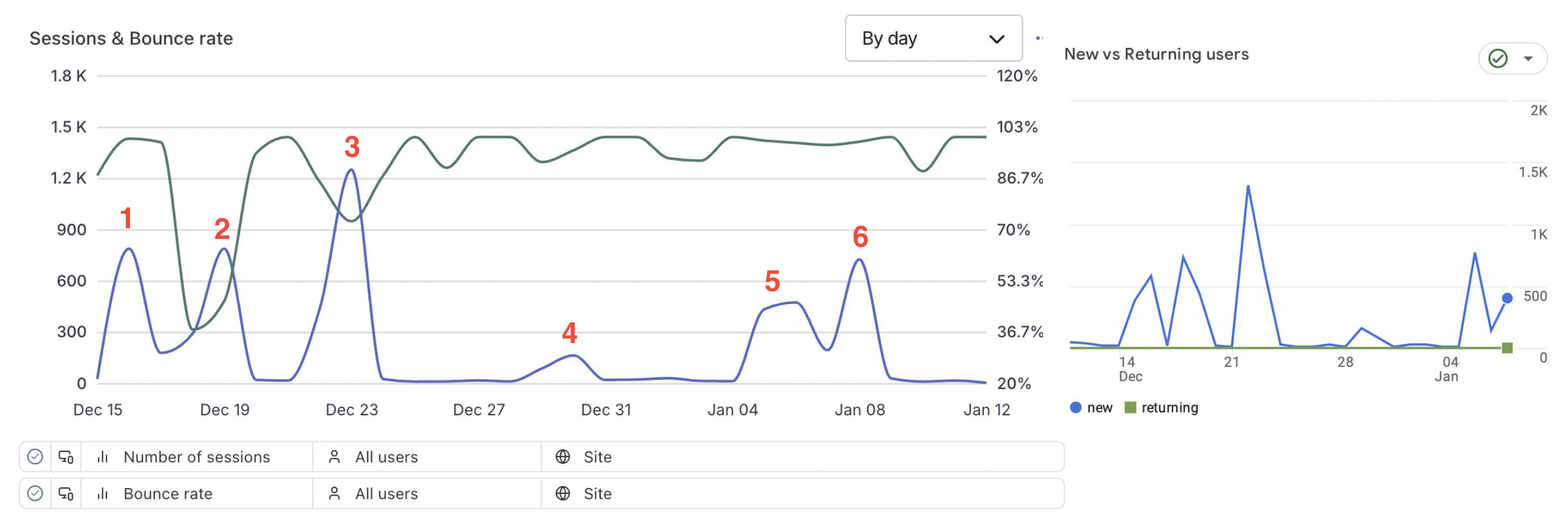
Here is email marketing case study we did for a client. Below is a chart with 6 labeled peaks – each corresponds to one email send. As one can see, the traffic in other times when there was no email sent remains mostly flat, while spikes occur when email is sent and prospects come to a website to check the offer.
In that month for our customer the direct traffic was 144 people, and 10 from google/organic, while after email campaign direct traffic that comes from email increased to 5.9K people and more started to search online 43 from google/organic.
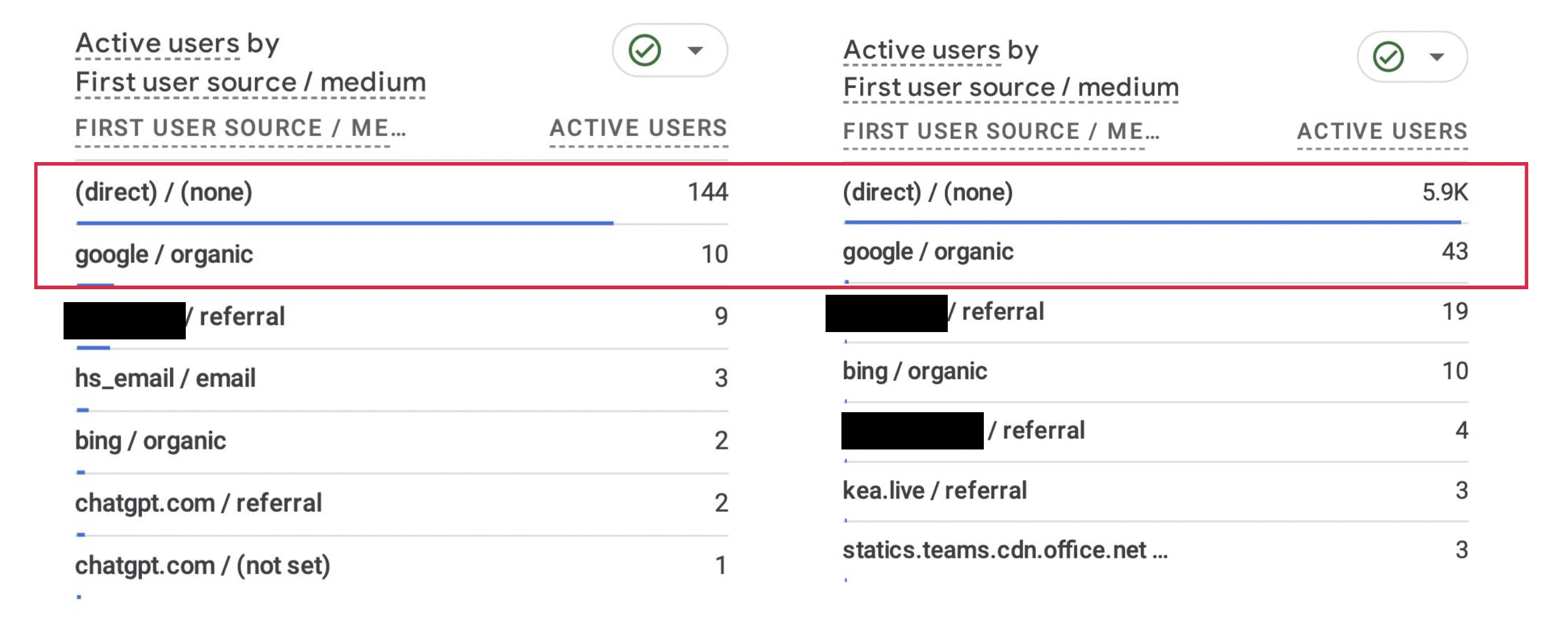
Every campaign creates a surge of visitors that can reveal valuable insights about user behavior.
Here is another case study as an example of influence of email marketing on visitors. One can see that traffic works in spikes when the email was sent, where some emails cause high interest (800-1.5K visitors), while some cause minor interest (200-500 visitors).
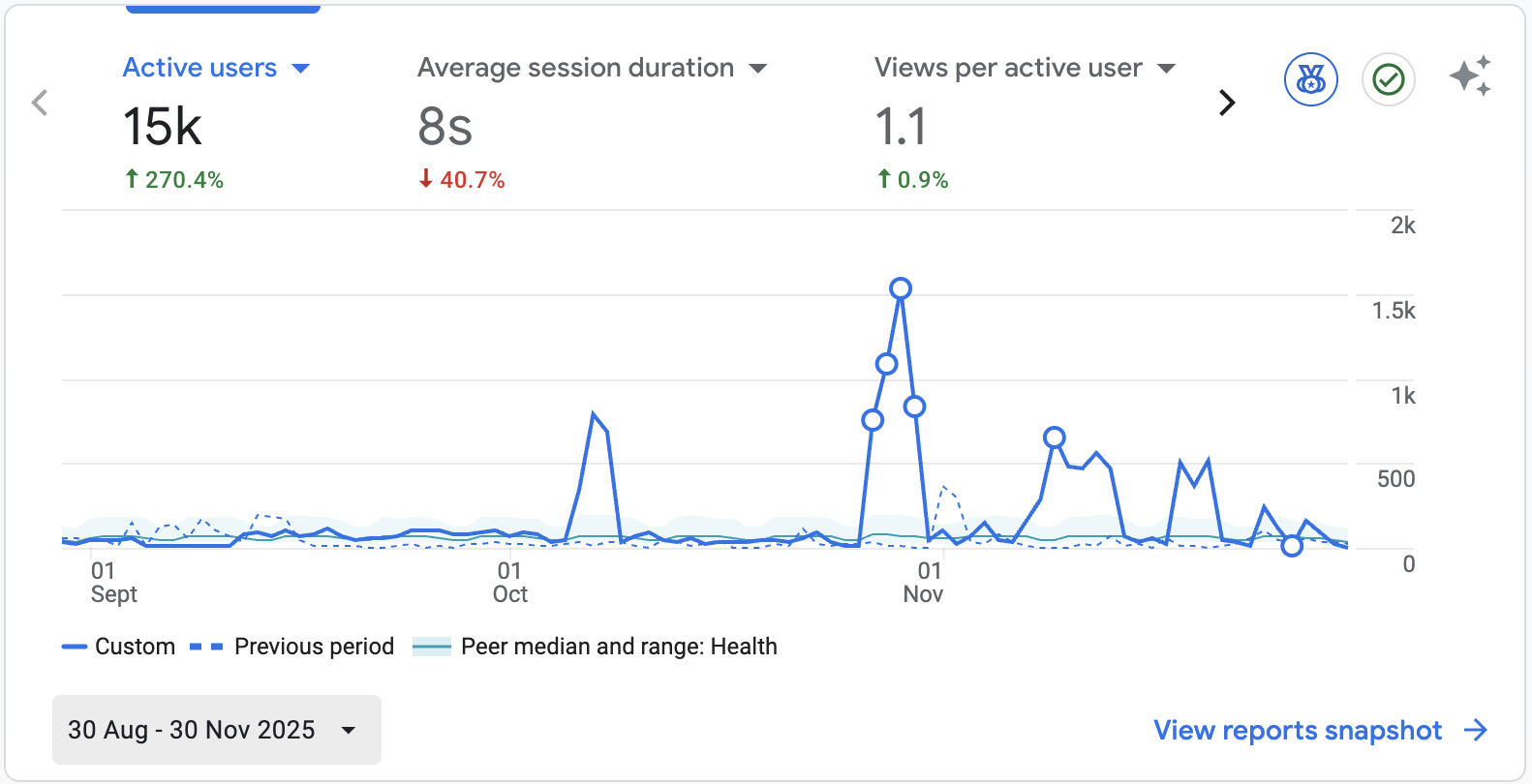
Such increases in traffic create valuable data and provide insights that help organizations understand:
• Which messages resonate
• Which pages receive engagement
• Which offers generate interest
• Which audiences convert
Email Campaigns Often Reveal Hidden Problems
An unexpected benefit of email marketing is that it can uncover issues elsewhere in the marketing funnel.
When hundreds or thousands of visitors arrive on a website simultaneously, previously unnoticed problems often become visible, including:
• Broken contact forms
• Non-functioning call-to-action buttons
• Poor landing page performance
• Confusing messaging
• Weak conversion paths
• Tracking and analytics issues
These problems are expensive because they prevent companies from converting traffic into leads and opportunities.
By analyzing email campaign performance together with website analytics, organizations can identify and resolve conversion bottlenecks before investing additional resources into growth initiatives.
Email marketing is therefore not just a communication channel. It is also a powerful diagnostic tool for understanding how prospects interact with your digital presence and where your website may need an improvement. Check our SEO service for biotech companies, startups and life sciences.
2. Search Engine Optimization (SEO)
Search engine optimization is one of the most powerful long-term marketing strategies for biotech companies.
Every day, researchers, scientists, procurement teams, investors, and healthcare professionals search for solutions, technologies, products, and services online. If your company does not appear in search results, you are invisible to a significant portion of your potential audience.
SEO helps biotech companies attract visitors who are actively looking for information.
Examples include:
• Cell therapy manufacturing services
• CRO services
• Biomarker discovery
• Genomics solutions
• Clinical trial recruitment
• Laboratory automation
• Antibody development
Unlike advertising, organic search traffic continues to generate results long after content has been published.
What Makes SEO Effective?
Successful biotech SEO combines:
• Keyword research
• Technical SEO
• Website architecture
• Scientific content creation
• Internal linking
• Link building
• Continuous optimization
Many biotech companies underestimate the value of educational content. Researchers and decision-makers often consume multiple pieces of content before contacting a supplier or requesting a quote.
Publishing high-quality content helps companies:
• Build authority
• Increase search visibility
• Educate prospects
• Generate qualified traffic
While companies do not need dozen thousands organic traffic to have a good business 100-500 good organic high-intent relevant qualified visitors is a must-have. For that great content on the website that addresses the intent needs of prospects needs to be published. Promote content of the website through email marketing, PPC Ads, digital PR to further amplify its effect and create brand awareness.
Below is an example when a website was almost not ranking on any keywords, and when we started to publish SEO-optimized content one page after the other and the spike is only ever growing since then.
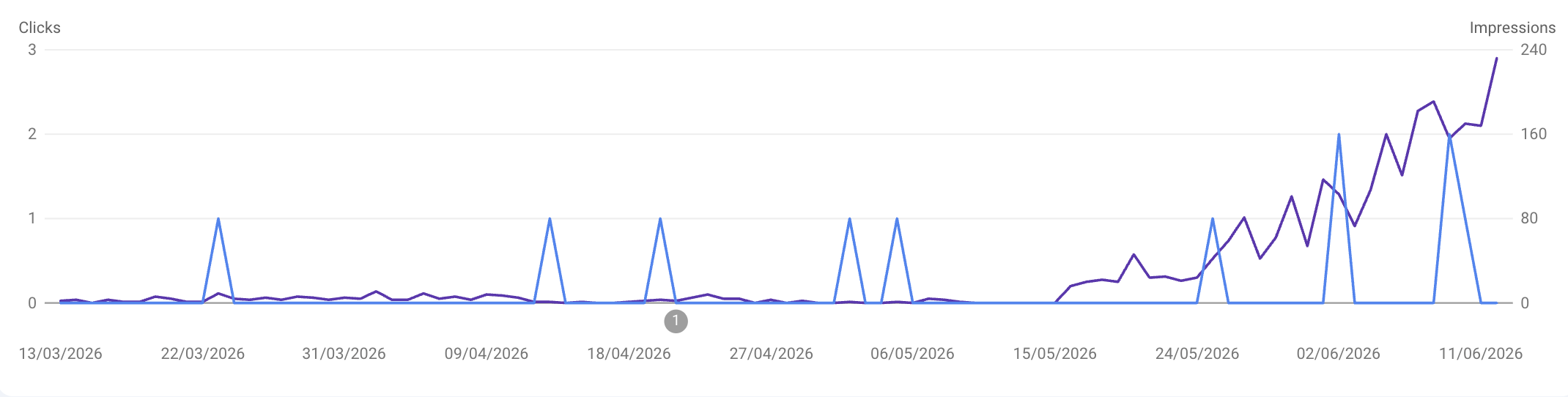
Before there was no more than 10 impressions per day, while one can see on a day from 15/05/26 it started to grow ever since then and within 1 month reached over 250 impressions per day. Impressions just to clarify are not views, these are the number of times how many times Google shown your website, any of its page to those who searched on phrases with which Google associates your website. Before it was just 6 queries(=phrases or search terms), in 1 month it became over 220 queries.
This is a common SEO pattern, where, initially, a website receives very little organic visibility, and as SEO-optimized content is consistently published and technical improvements are implemented, impressions and clicks begin to increase. Over time, this creates a compounding effect where content continues attracting visitors months or even years after publication.
Unlike paid advertising, SEO creates a long-term asset that continues generating traffic without requiring payment for every click.
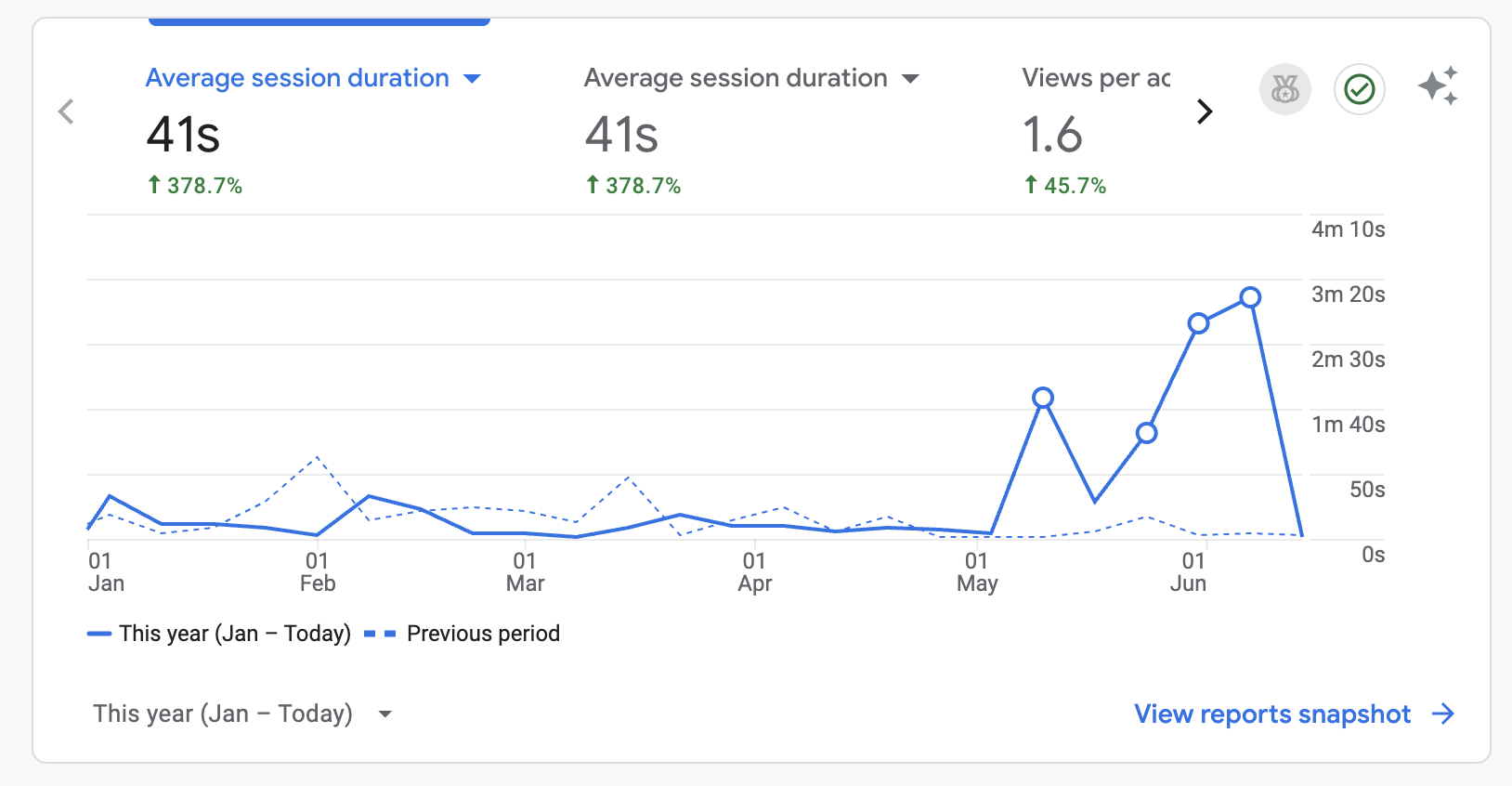
Because there is more content, which is of good quality and there is traffic that comes from email marketing, the average session duration metric from Google Analytics also increased since ever then. If before it was 10-40 seconds, since new pages were published the average session duration reached over 3 minutes in less than 1 month time, what is a great improvement.
Still have doubts whether our SEO service has value? Check more SEO case studies and SEO service pages for biotech startups, life science, pharma, CROs/CDMOs, and individual subject-matter experts.
3. Pay-Per-Click Advertising (PPC)
SEO generates credibility and enables long-term growth, however it does not generate a demand. Demand is generated only by outbound – which are email and PPC Ads. Because you saw that Ad or received that email you start wanting that service or product.
Email nurtures relationships.
PPC delivers immediate visibility.
Platforms such as Google Ads and LinkedIn Ads allow biotech companies to place their message directly in front of highly targeted audiences.
This can be especially valuable when:
• Launching new products
• Entering new markets
• Promoting conferences
• Recruiting clinical trial participants
• Generating leads quickly
Google Ads
Google Ads allows companies to target users actively searching for relevant products and services. They work well when your website is SEO-optimized. If not, it will take more budget to cut through the noise, that is why we recommend to start with SEO service first.
Google Ads can run for any any type of service and product. Examples include:
• Bioprocessing services
• Contract research organization for stage II clinical trial in oncology
• Cell therapy CRO
• Laboratory software
• Clinical trial recruitment services
Because search users already demonstrate intent, these campaigns often produce highly qualified traffic.
LinkedIn Advertising
LinkedIn provides access to highly specific professional audiences.
Biotech companies can target users based on:
• Job title
• Company
• Industry
• Seniority
• Geography
• Skills
• Activity
This makes LinkedIn particularly effective for reaching:
• Scientists
• Research directors
• Procurement teams
• Business development professionals
• Executives
PPC Works Best When Combined With SEO And Email
Many companies treat PPC as a standalone channel.
The strongest results typically occur when SEO, email marketing, and paid advertising work together.
For example:
• SEO attracts visitors through search.
• PPC accelerates visibility for strategic keywords.
• Email nurtures prospects who are not yet ready to buy.
Or other example:
• User receives an email with your information.
• He searches for your offer in Google or AI platform and finds your company.
• He sees your Ads on social media and now downloads your whitepaper.
Together, these channels create multiple touchpoints throughout the buyer journey, allowing to deliver several types of information to the prospect to let him consider your offer
Which Digital Marketing Strategy Should Biotech Companies Prioritize?
The answer depends on objectives, budget, timeline, and audience.
In most cases:
• SEO is the long-term asset, it is an investment in your website and its content. It remains with you as long as the website is up.
• Email marketing produces short-term results and allows to find immediate customers.
• PPC generates the fastest traffic, and traffic means sales.
Rather than viewing these channels as competing options, successful biotech companies use them together as part of an integrated digital marketing strategy.
Conclusion
The biotech industry is becoming increasingly competitive, making digital marketing more important than ever. While many marketing activities can contribute to awareness, the channels that consistently generate measurable business results are SEO, email marketing, and PPC advertising.
SEO creates long-term visibility. Email marketing builds relationships and uncovers conversion opportunities. PPC provides immediate access to highly targeted audiences.
Companies that combine these three channels effectively are better positioned to increase visibility, generate qualified leads, support long buying cycles, and accelerate business growth in increasingly competitive life science markets.